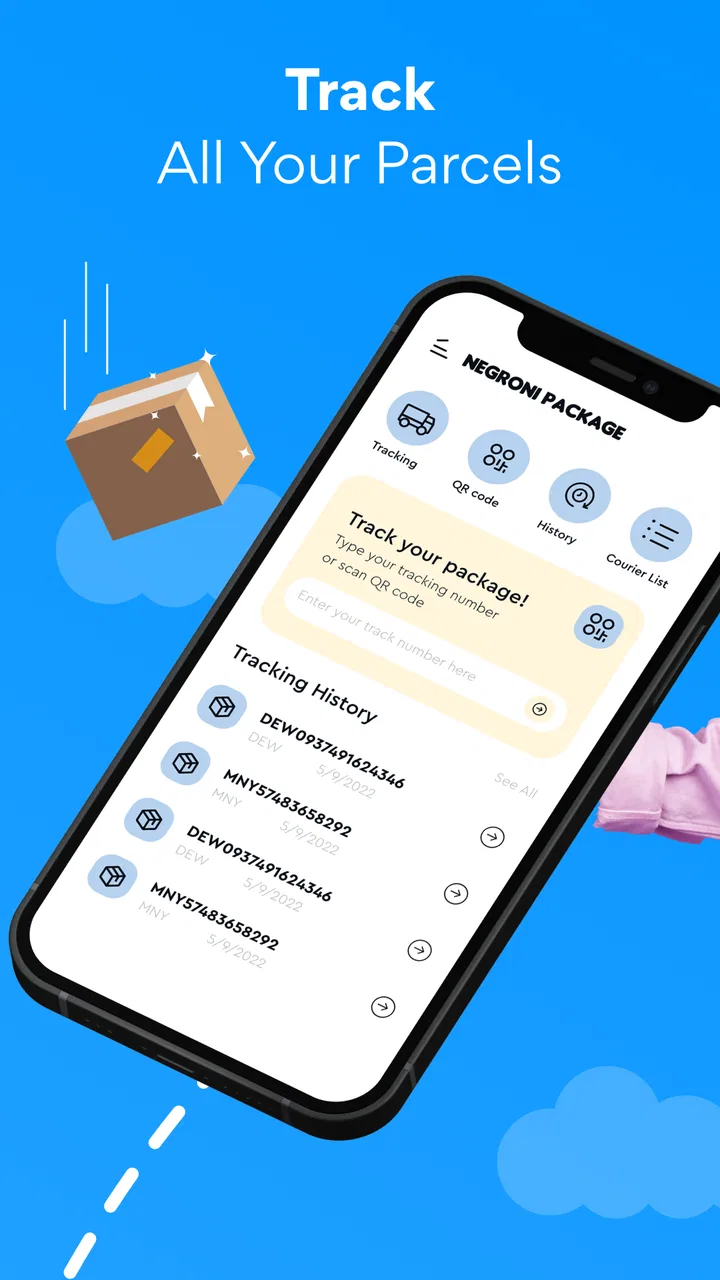
Package Tracker, Flight Radar
- 4.0
- Rating
- 500.00K
- Installs
- Free
- Price

 Analysis by App-foxy
I usually install a package-tracking app when my inbox becomes a mess of order confirmations, courier messages, and vague delivery windows. Package Tracker, Flight Radar takes a simpler route: it puts parcel monitoring and flight information in one shopping-focused app. After using it, I see the appeal for people who buy from several stores and do not want to check every courier separately.
The app is free to download, is suitable for Everyone, and comes from Negroni. It has reached over 500 thousand installs and holds a 4.0 average from around 1.1 thousand ratings. Those figures suggest a useful, established tool rather than an experimental download. Still, I would not choose it automatically for every kind of delivery problem. The right decision depends on whether you want a convenient overview or the deepest possible information from one specific carrier.
What I looked for before trusting it with deliveries
My first test for a tracker is not how attractive the interface looks. It is whether I can add a shipment quickly, recognize its current status without decoding courier language, and return to it later without searching through old emails. A good tracker should reduce small daily chores, not create another inbox to maintain.
You May Also Like

 AccuWeather: Weather Radar
AccuWeather Review: A Quick, Clear Forecast for Everyday Decisions
For everyday plans, the best forecast is the one you can understand quickly. AccuWeather makes rain timing, radar, and local conditions easy to act on, with a few trade-offs.

 Hill Climb Racing
Why Hill Climb Racing Still Turns Crashes Into One More Run
A tiny car, a bumpy hill and one more upgrade: Hill Climb Racing keeps resurfacing because its simple chaos makes every near-miss feel personal.

 AliExpress - Shopping App
AliExpress Makes Global Shopping Feel Personal, but Shoppers Bear the Risk
AliExpress turns a global marketplace into a pocket-sized discovery engine. Its reach is useful, its shopping loop compelling, and its trade-offs easy to miss.

 Lords Mobile: Kingdom Wars
Lords Mobile Is a Kingdom-Building Routine, Not a Quick Match
A case-by-case verdict on the building, battles, device demands, and social commitments that make Lords Mobile rewarding for some players and exhausting for others.

 PDF Scanner app - TapScanner
TapScanner Makes Paperwork Easier to Capture, Check, and Share
TapScanner makes scanning with a phone feel less like a rescue operation and more like a dependable step in getting work done. Its capture tools are useful, though not flawless.

 Block Blast!
 Shows How Much a Puzzle Game Can Leave Out
A quiet grid game shows why puzzle players increasingly value instant clarity, repeatable skill and low-pressure play—and where the genre still needs to catch up.
More From Our News Desk
View All News


That matters especially when an order changes hands between shipping companies. A parcel may begin with an international service, move through customs, and finish with a local carrier. Checking each company manually can mean copying the same tracking number into several websites. The central value here is having one place to follow that chain.
I also consider how well an app fits different habits. Someone who receives one parcel a month may prefer the carrier’s own application or a browser page. Someone who orders household items, gifts, clothing, and replacement parts from different sellers has a stronger reason to use a dedicated package tracker. Combining parcel monitoring with flight information also makes the app more relevant to people who follow both purchases and travel.
The practical question is not simply whether tracking exists. It is whether the app saves enough time to justify installing it, adding shipments, and learning another interface. In my experience, the answer is yes when several deliveries are active at once, but less clearly so when every purchase already appears neatly inside one retailer’s app.
The everyday workflow that makes the app useful
Imagine ordering a birthday gift from another country while waiting for a replacement charger and a pair of shoes from local shops. Each seller sends a different message, and the delivery estimates do not use the same wording. I would add the shipment details to one list, then check that list instead of opening three retailer accounts and several courier pages.
The advantage is not dramatic automation; it is reduced mental clutter. I can look for movement, identify which parcel needs attention, and avoid repeatedly opening an email thread. For a busy household, that overview can be more valuable than a long explanation of every scan event.
There is also a useful distinction between an order page and a tracking app. A retailer normally shows the purchase in the context of its own store. A tracker is more neutral, so it can bring unrelated purchases together. That makes it a better fit for people who shop across marketplaces, independent stores, and international sellers.
My advice is to add a parcel as soon as the seller provides a usable tracking number, then keep the original order email until delivery is complete. The tracker is a convenient view, but the seller’s message remains useful if you need to contact support about an incorrect item, refund, or address problem.
Where it is strongest compared with separate courier pages
The clearest strength is consolidation. If I used only courier websites, I would have to remember which company handles each order. This app gives me a single starting point. That is particularly helpful when I am not sure which carrier a seller selected, or when shipment responsibility changes during an international journey.
The flight side broadens the same idea. Instead of treating travel information as completely separate from shopping and delivery tasks, the app places both kinds of movement in one utility. I can imagine using it before a trip to watch a flight while also checking whether a parcel will arrive before I leave home.
That combination is more useful than it first sounds. Travel often creates delivery decisions: should I wait for a package, ask someone else to receive it, or postpone an order? Having flight information nearby can help me make that decision without jumping between unrelated tools.
Another strength is accessibility. The minimum operating system is Android 6.0, so the app can serve people using older phones rather than limiting the experience to recent devices. That does not guarantee identical performance on every handset, but it makes the app more approachable for users who keep a reliable older phone instead of upgrading frequently.
The current version is 1.9.0, and the app’s continued presence in the store gives it a more finished feel than a brand-new tracker. I still judge it by daily usefulness rather than version numbers. A tracker earns its place when it helps me answer “where is it?” quickly and consistently.
Small habits that improve the tracking experience
One practical habit is to use a consistent naming style for shipments. Rather than leaving several entries with only long tracking codes, I would label them mentally by purpose: gift, replacement part, work item, or household order. That makes a list easier to scan when multiple parcels are moving at once.
A second tip is to check the tracker after a meaningful shipping event rather than refreshing constantly. Courier systems do not update every minute, and repeated checking can create anxiety without producing new information. I use the app to understand the latest known position, then wait for the next genuine scan.
For international deliveries, I would treat estimated timing as guidance rather than a promise. Customs processing, handoffs, weekends, and local delivery capacity can all affect the final stage. The app can make the journey easier to follow, but it cannot remove delays that happen outside the tracking interface.
A third useful workflow is to compare the app’s status with the seller’s order page when something looks unusual. If one says the parcel is moving while the other still shows preparation, that difference is a reason to investigate, not proof that either service is broken. Keeping both views available helps separate a tracking update from an order-processing problem.
When another kind of app may be a better choice
A central tracker is not automatically better than a carrier’s own app. If nearly all my deliveries come from one courier, that courier’s service may offer a more direct relationship with the shipment. It may also be the better place to handle delivery instructions or account-specific support, depending on what that company provides.
The same applies to retailer-heavy shopping. If I mainly buy from one marketplace, its order history may already show payment, returns, seller messages, and delivery progress together. Moving the tracking number into a separate app could add a step without adding much value.
People who need highly specialized logistics information should also compare expectations carefully. A general package tracker is designed for a broad range of parcels, not for replacing every detail available from a shipping company, warehouse dashboard, or business logistics system. If exact handoff documentation or operational records matter, the original carrier remains important.
The flight feature can be convenient, but frequent travelers may prefer a dedicated aviation app built around airport tools, itinerary management, or detailed travel planning. I would choose this app when I want flight information alongside parcels, not when flight management is the main reason for installing anything.
There is also a privacy and organization trade-off whenever I gather several orders in one place. I gain convenience, but I should be selective about what I add and keep my account details protected. I would not treat a tracker as a replacement for secure shopping accounts, payment protections, or the seller’s customer-service channel.
What the free model means in practice
The app is free, which makes trying it low-risk. That is important for a utility: I can test whether its workflow matches my shopping habits before committing to it as my main tracker. The presence of in-app purchases ranging from $4.99 to $29.99 per item means some optional paid elements may appear, so I would review any purchase screen carefully rather than assuming every part of the experience is included without charge.
For occasional users, the free entry point may be enough to decide quickly. For heavier users, the real question is whether a paid option removes a limitation that matters to them. I would not pay merely because I have many tracking numbers; I would pay only if the added convenience clearly saves more time than the cost.
This is also where switching costs matter. Moving from courier websites to a central tracker requires collecting active tracking numbers and recreating a list. Moving back is easy because the original numbers remain in order emails. In other words, trying the app does not lock me in, but keeping the list accurate still requires a little discipline.
If I already use a retailer’s app successfully, I would start with only two or three deliveries rather than transferring everything. That small trial reveals whether the app recognizes my preferred shipping services and whether its presentation is clearer than the tools I already use. It is a better test than judging it from one parcel alone.
Who should install it, and who should skip it
I would recommend it to frequent online shoppers, families managing several deliveries, and people who regularly receive parcels from different countries or carriers. It also suits travelers who like the idea of checking flight information and delivery progress from the same utility.
It is especially sensible for someone who currently searches an email account every time a parcel is late. A dedicated list creates a more deliberate routine: add the shipment, check its latest movement, and contact the seller or carrier when the status requires action.
I would be less enthusiastic for someone who receives very few parcels, buys almost exclusively from one store, or needs advanced carrier-specific controls. In those cases, the existing retailer or courier app may be simpler. I would also skip it as my primary travel tool if flight planning is my central need.
The Everyone age rating makes it approachable for a broad household audience, although I would still explain to younger users that tracking information is not the same as a guaranteed delivery appointment. The app can show progress, but decisions about addresses, purchases, and support should remain with the account holder.
My recommendation after weighing the trade-offs
Package Tracker, Flight Radar is a practical choice when my problem is fragmentation. It brings parcels from different shopping sources into one place and adds flight information without requiring a separate travel-focused installation. I value that combination because it matches real life: shopping, receiving deliveries, and traveling often overlap.
Its strongest case is not that it replaces every official service. It is that it gives me a convenient first view before I decide whether I need the seller or courier. That distinction keeps expectations realistic. For routine checking, the app can save time; for disputes, delivery changes, or unusual delays, I would still go back to the original company.
Negroni’s app has a 4.0 average and around 38 written reviews, while its free price makes experimentation straightforward. I would use it as an organizing layer, not as the sole authority for urgent shipments. That is a balanced role, but a valuable one.
My final recommendation is simple: install it if you are tired of switching between tracking pages and want one place for parcels plus flights. Try it with a small group of active deliveries first, keep the seller emails available, and check whether the combined view genuinely reduces your daily effort. If your needs center on one retailer, one courier, or advanced travel planning, the usual specialized alternative may serve you better.
For my own use, the app earns a place when several shipments are moving at once. It is not a magic solution to late parcels, but it makes the information easier to gather and act on. That is a modest benefit, yet for a shopping utility, less searching and clearer decisions are exactly the kind of improvement I want.
FAQs for Package Tracker, Flight Radar
01How accurate is the Package Tracker app in providing real-time updates?
The Package Tracker app is highly accurate, offering real-time updates by integrating with multiple courier services. It provides notifications for each stage of your package's journey, from dispatch to delivery. However, the accuracy can vary slightly based on the courier's information updates, so occasional delays might occur.
02Can I track multiple packages from different carriers simultaneously?
Yes, the Package Tracker app allows you to track multiple packages from various carriers at the same time. It supports a wide range of courier services, including USPS, FedEx, UPS, and more, consolidating all your tracking information into a single, user-friendly interface for easy management.
03Is Flight Radar's live tracking feature available globally?
Flight Radar's live tracking feature is available globally and covers a vast majority of the world's airspace. It provides real-time flight information, including aircraft location, speed, and altitude. However, certain regions might have limited coverage due to local restrictions or technical limitations.
04What are the main privacy concerns when using Flight Radar?
Flight Radar collects data from public sources, but users should be aware that enabling location services can share their location with the app. The app is committed to privacy, and users can manage their data settings. It’s advisable to review the privacy policy to understand what information is being used and shared.
05Do these apps consume a lot of battery or data?
Both Package Tracker and Flight Radar are designed to be efficient, but real-time tracking and updates can consume more battery and data. To mitigate this, you can adjust the update frequency settings or use Wi-Fi when available. Additionally, closing the app when not in use can help conserve battery life.
Pros
- Real-time flight updates.
- Global coverage of flights.
- User-friendly interface.
- Detailed flight information.
- Customizable notifications.
Cons
- Requires constant internet connection.
- Limited features in free version.
- Occasional app crashes.
- Battery consumption can be high.
- Ads can be intrusive.

Package Tracker, Flight Radar
Gallery